Engineering for Imperfect Conditions
In controlled environments, sealing performance is often assumed to be straightforward. Surfaces are flat, tolerances tight, and loads predictable.
In practice, that’s rarely the case.
Assemblies frequently involve thin sheet metal, cast components, plastics or soft alloys. Holes may be oversized or slightly misaligned. Surfaces are uneven and subject to vibration, pressure cycling or thermal expansion. Under these conditions, sealing becomes more complex and more dependent on the behavior of the fastener itself.
Traditional fasteners are often designed with a primary focus on clamp force and torque-tension relationships. When sealing is required, it’s addressed through secondary elements such as gaskets, washers or applied sealants.
These approaches can be effective, but they introduce variability. Gasket compression can be inconsistent. Installation torque may vary. Components can shift out of alignment. Over time, materials such as plastics and elastomers may relax, reducing sealing effectiveness.
At the fastener level, even small inconsistencies can create leak paths, especially in demanding environments with exposure to vibration, pressure changes and thermal cycling.
The Role of Head Geometry in Sealing
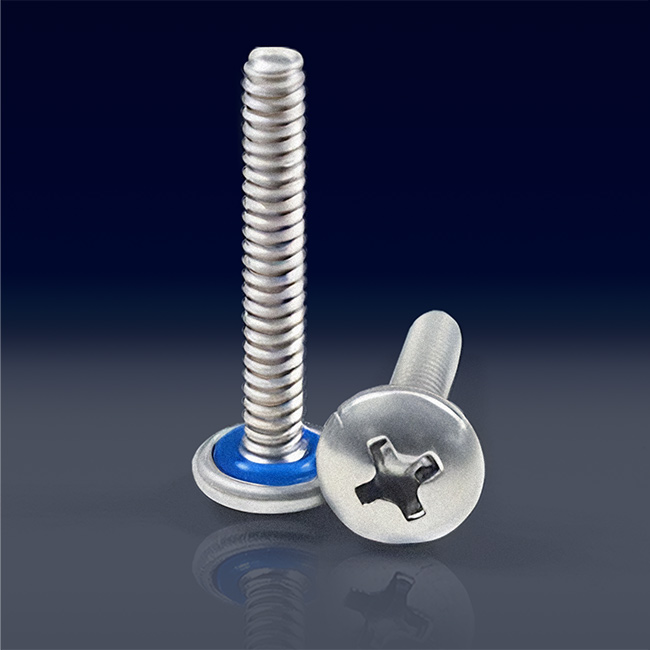
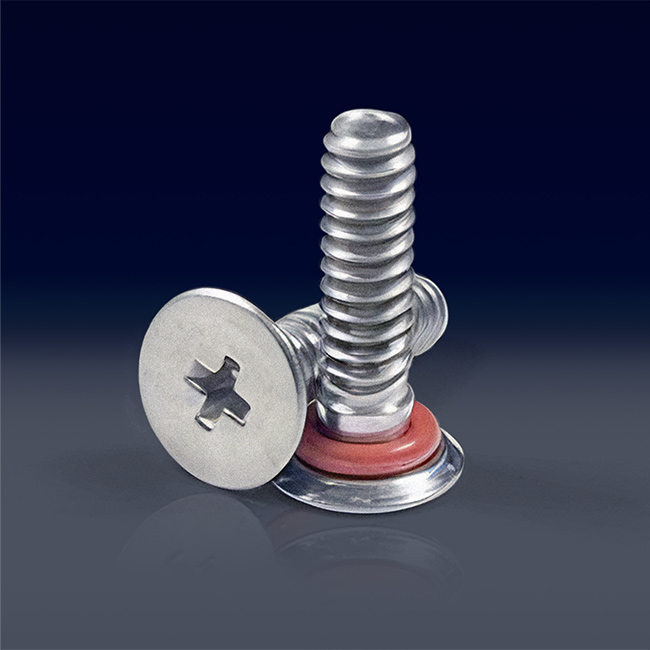
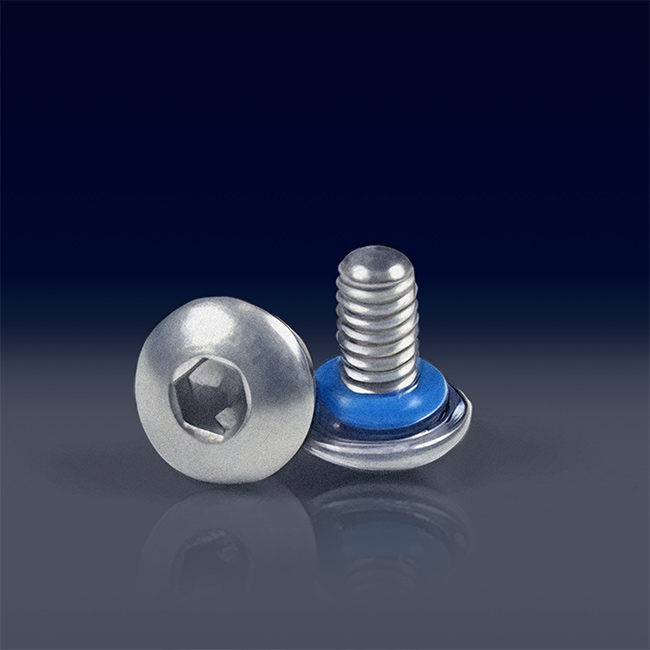
One of the most overlooked variables in sealing performance is head geometry and specifically the amount of surface area in contact with the assembly.
Oversized head fasteners increase the load-bearing surface, distributing clamp force over a wider area. This reduces localized stress on thin or soft materials and helps prevent deformation, cracking or pull-through. It also improves stability across uneven or rough surfaces, where standard heads may concentrate load in smaller contact zones.
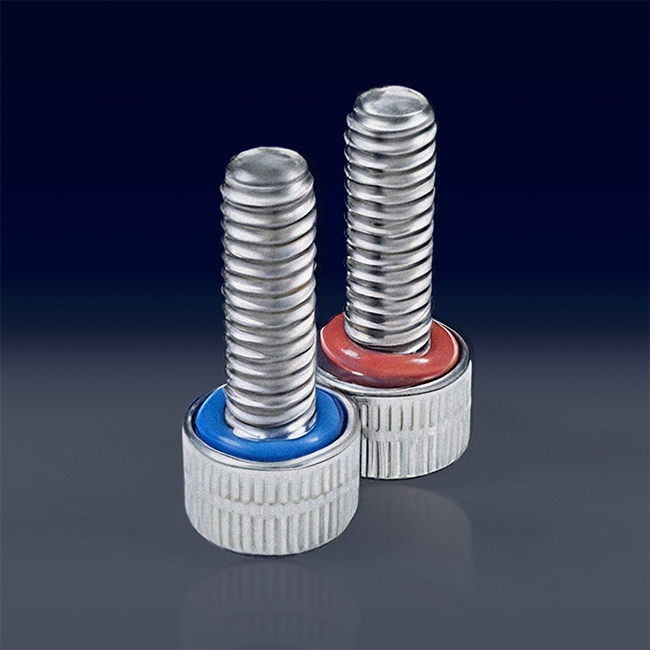
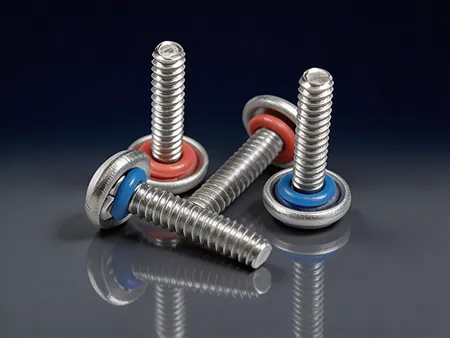
Increased surface area also supports more consistent compression of sealing elements, such as ZAGO’s O-rings. By allowing for more uniform compression of the sealing element without excessive torque, oversized head designs help reduce the risk of thread stripping, over tightening, and material damage.
Lower torque improves repeatability in both automated assembly and field service conditions, where controlling installation variables is critical to performance.
Stability Under Vibration, Pressure Cycling and Imperfect Surfaces
In dynamic environments, clamp load must be maintained over time, not just achieved at installation.
A larger contact area increases friction under the head, helping reduce micro-slip and improving vibration resistance. This contributes to maintaining seal integrity under pressure cycling and fluctuating loads. Reduced embedment and creep—particularly in plastics and elastomers—also support more stable preload over the lifecycle of the assembly.
Oversized head fasteners help compensate for common surface imperfections. They can bridge rough or cast surfaces, cover oversized or imperfect holes, and accommodate minor misalignment. In some cases, this can reduce the need for secondary machining or surface finishing, simplifying manufacturing requirements while improving sealing performance.
Where Oversized Heads Make Sense
These characteristics make oversized head sealing fasteners well-suited for applications such as automotive engines and transmissions, hydraulic manifolds, pumps and compressors, HVAC systems, battery enclosures and outdoor or IP-rated electronics. These environments share a common requirement: maintaining seal integrity despite variability in materials, loads and operating conditions.
Like any engineering solution, oversized head designs involve trade-offs. Larger head diameters may not be suitable for tight clearances or densely packed assemblies, and increased material usage can raise cost. They may also be less appropriate in applications requiring highly precise torque-to-tension relationships. As with any fastener selection, the decision depends on the priorities of the system.
For assemblies involving thin materials, uneven surfaces or sealing requirements, increasing bearing surface area can significantly improve performance. Oversized head sealing fasteners offer a practical way to achieve reliable sealing without excessive torque, while maintaining durability under vibration and pressure.
In these cases, oversized head sealing fasteners provide a way to achieve reliable sealing without excessive torque, maintain durability under vibration and pressure, and reduce dependence on secondary sealing elements.
ZAGO has applied this design approach across its line of self-sealing fasteners, integrating a precision-molded O-ring into a groove beneath the fastener head to create a 360-degree barrier against contaminants. By combining load distribution and integrated sealing in a single component, these solutions help address common leak paths at the connection point while simplifying assembly.
When sealing performance depends on real-world conditions, not ideal ones, designing at the fastener level becomes a critical part of the system.
When every connection counts, ZAGO delivers.

 English
 Deutsch
 Français
 Italiano
 Español
 SHIPPING